Knolly
Figma Plugin
Introduction
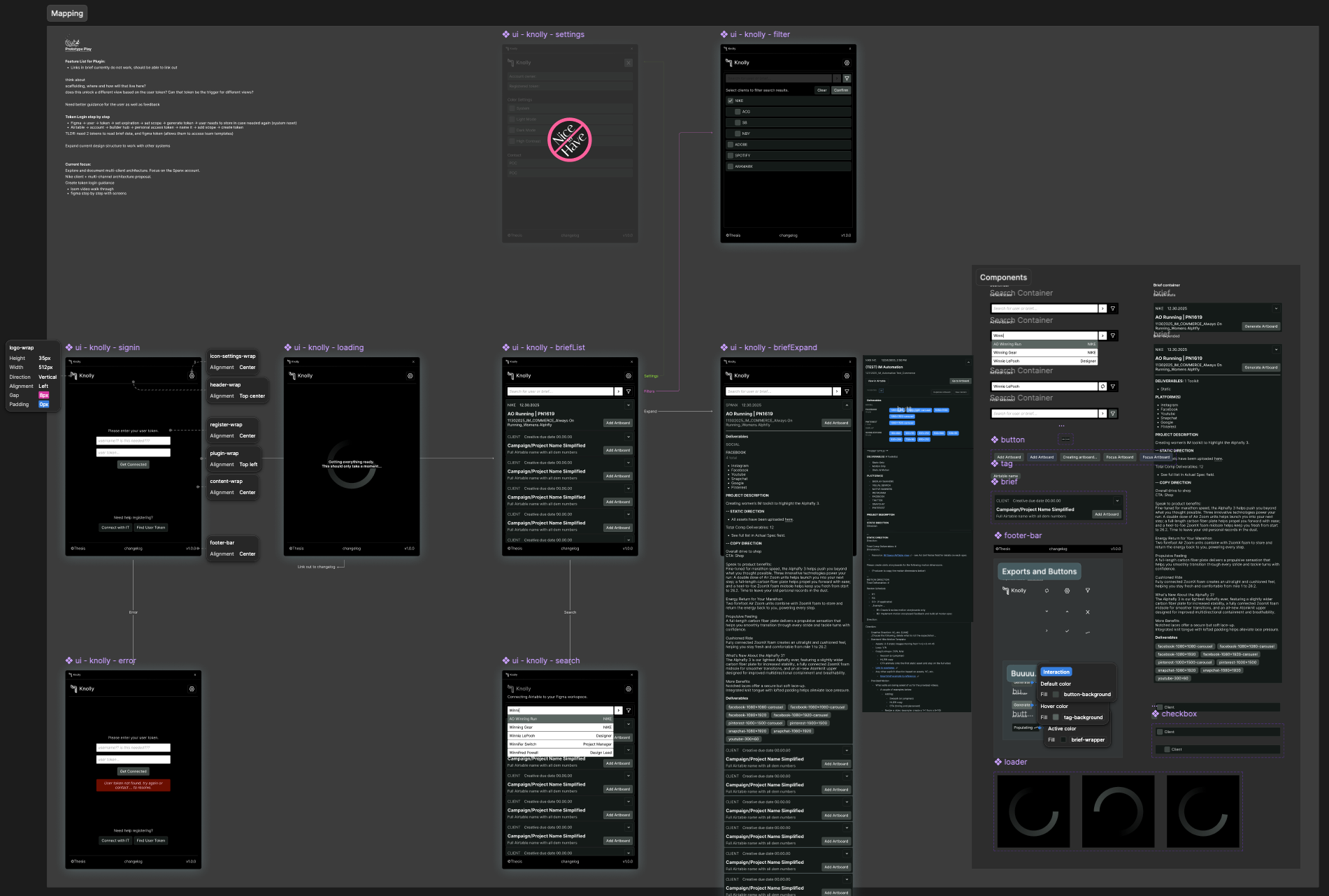
Knolly is a Figma plugin built for Nike's production design team. It connects live Airtable project briefs directly to Figma — surfacing timelines, assets, collaborators, and brand guidelines without leaving the tool. Designers find their project, click a button, and their working space is populated with production-ready artboards, pre-loaded with branding, export settings, and safety guides. I led the plugin UI and UX, and designed the white-label design system powering it.
Challenge
Nike's production designers were context-switching between Figma, Airtable, and brief documents just to start a job — a fragmented workflow that created friction before a single asset was placed. Connecting a design system to the plugin introduced a deeper technical constraint: Figma component instances don't allow free design within frames, and they don't carry export settings — critical information when you're producing 20-30 assets per project.
The solution required precision. I guided the development direction toward an approach where the plugin brings in artboards with design elements nested and applied, breaks the instance from the parent component on placement, and applies export settings automatically. To preserve flexibility without losing system integrity, I built the design system on local variables at the top level rather than component variables — allowing designers to work freely inside each artboard while maintaining brand consistency across Nike and Jordan.
Role
Lead Product Designer
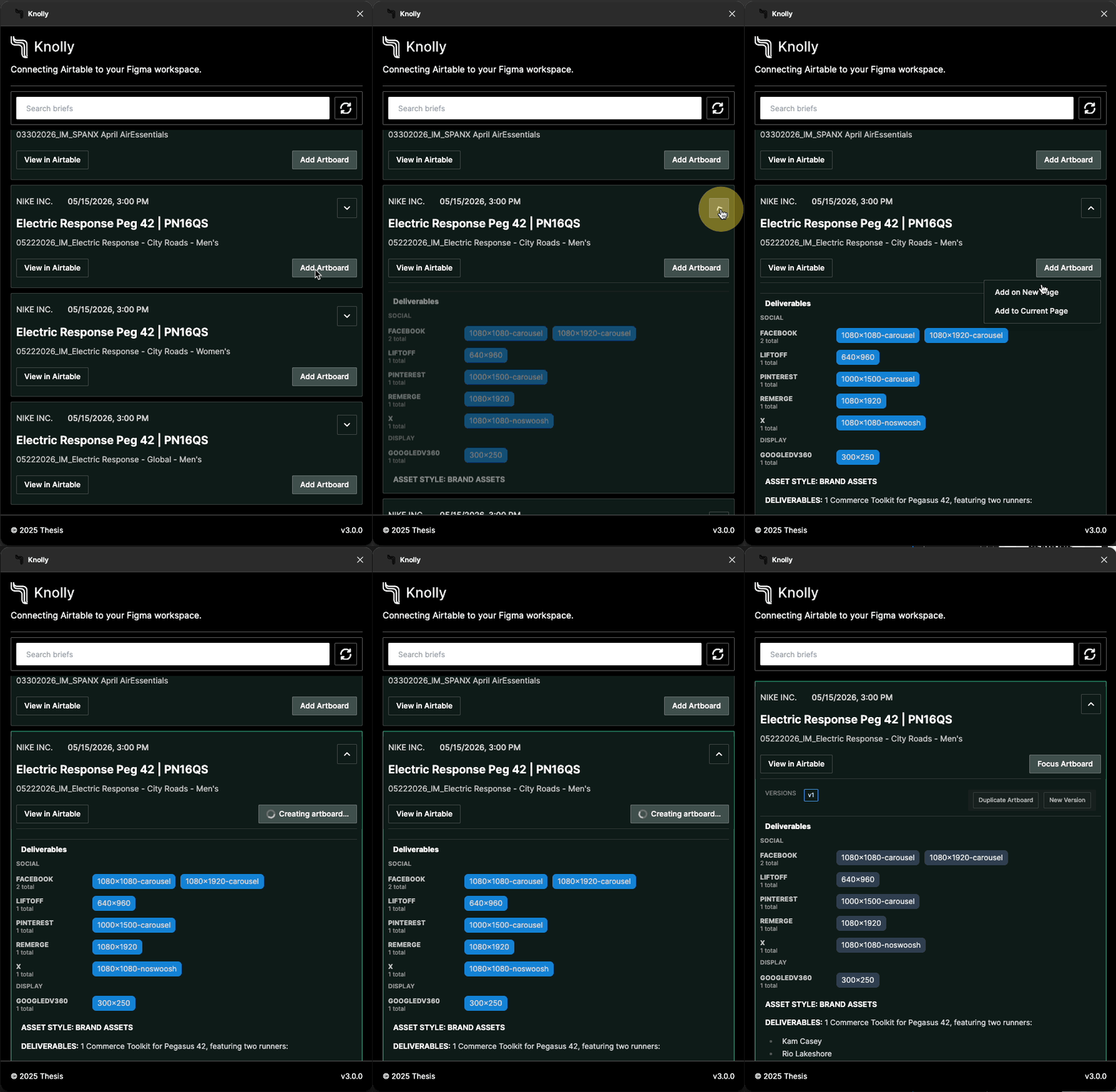
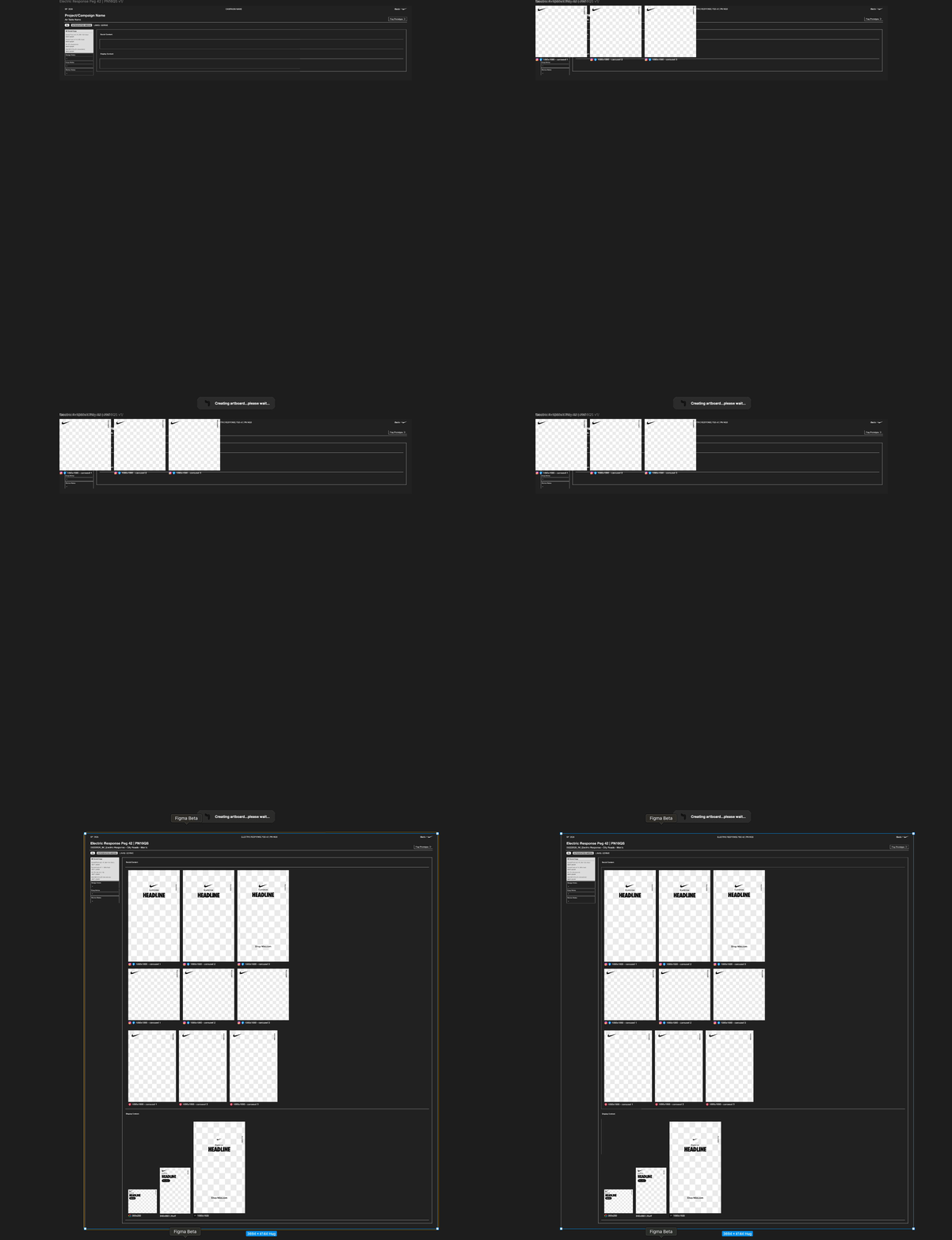
One-click Setup
Designers go from brief to fully equipped artboard in a single action, replacing a multi-tool, multi-document workflow that previously required manual cross-referencing before work could even begin.
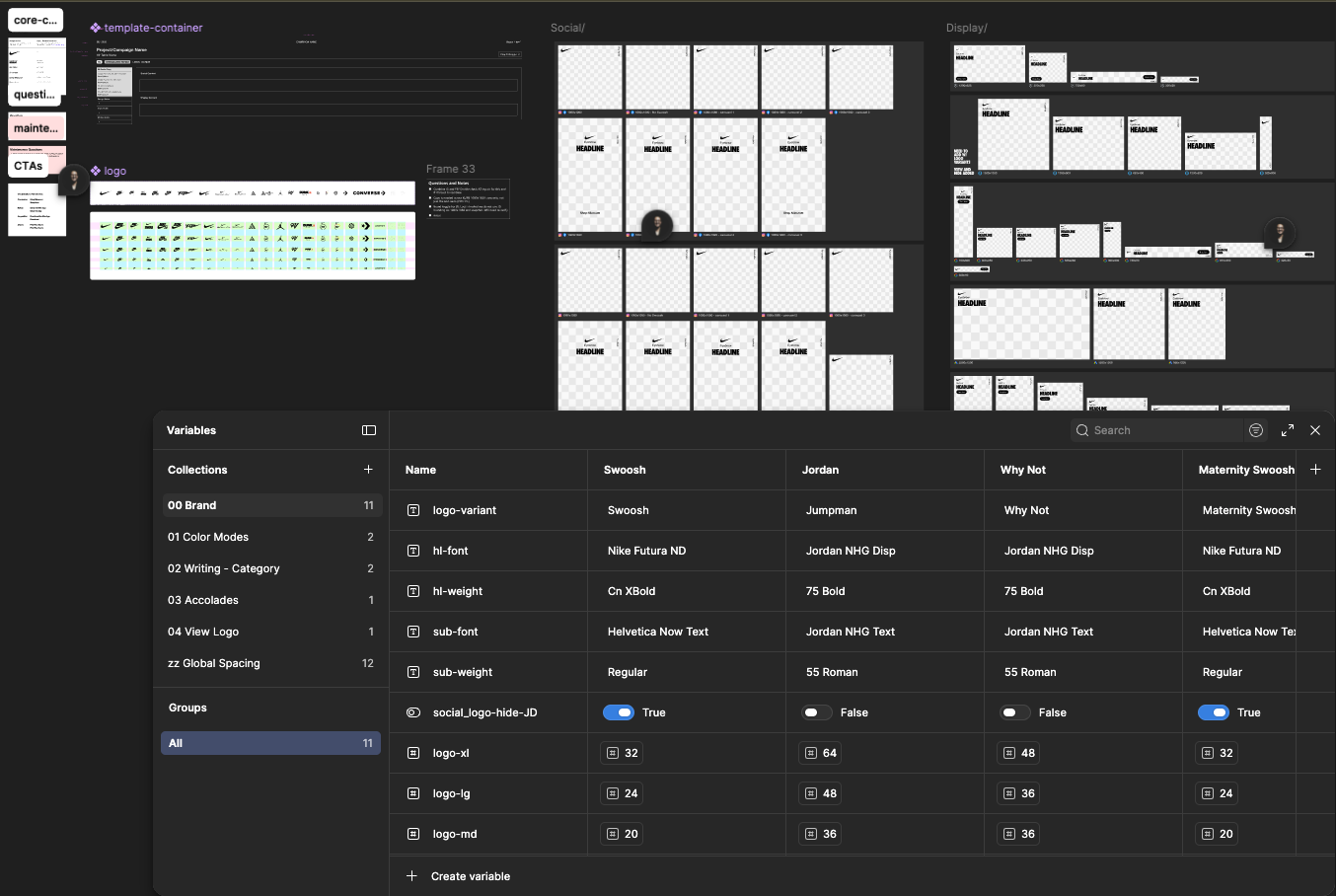
Brand switching
A design system with Figma local variable modes enables instant switching between Nike, Converse, and Jordan branding across all creative formats, with color modes and built in booleans for increased time savings.
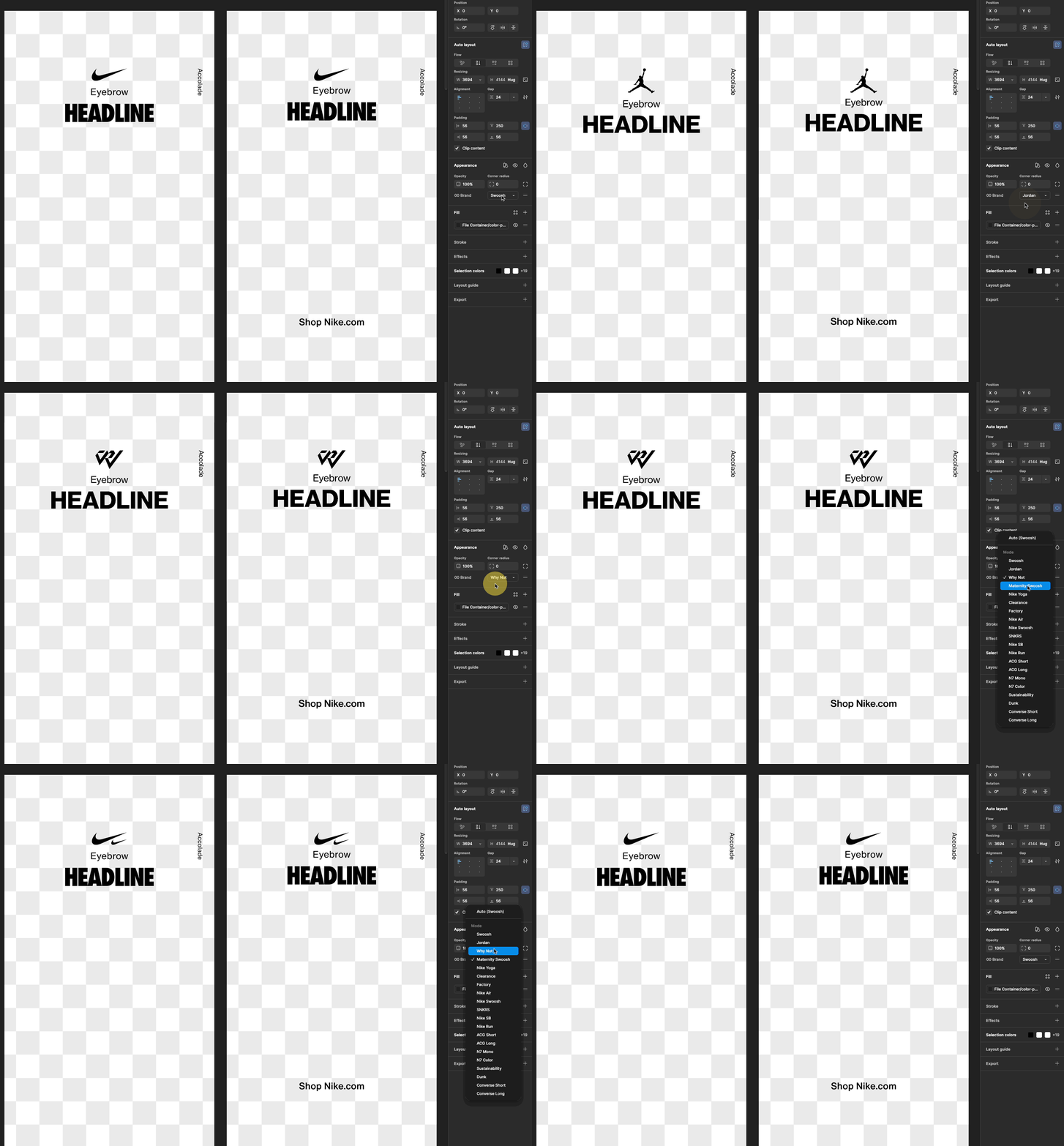
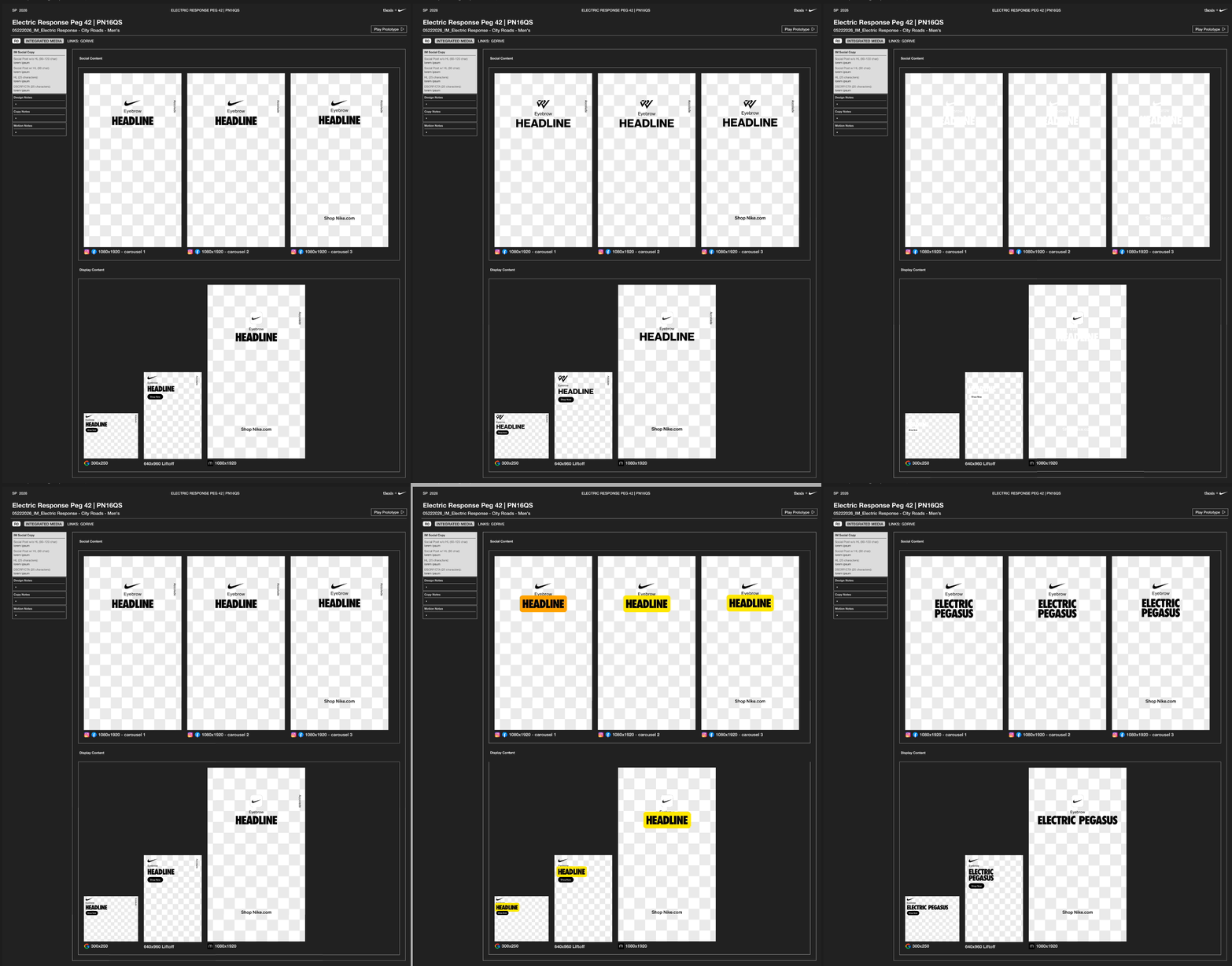
Flexibility without compromise
By architecting the design system around local variables at the top level, with a deliberate mix of component and local variables nested within, the plugin breaks instance constraints on placement — giving designers full creative freedom while preserving brand integrity and export accuracy.